
The four parts
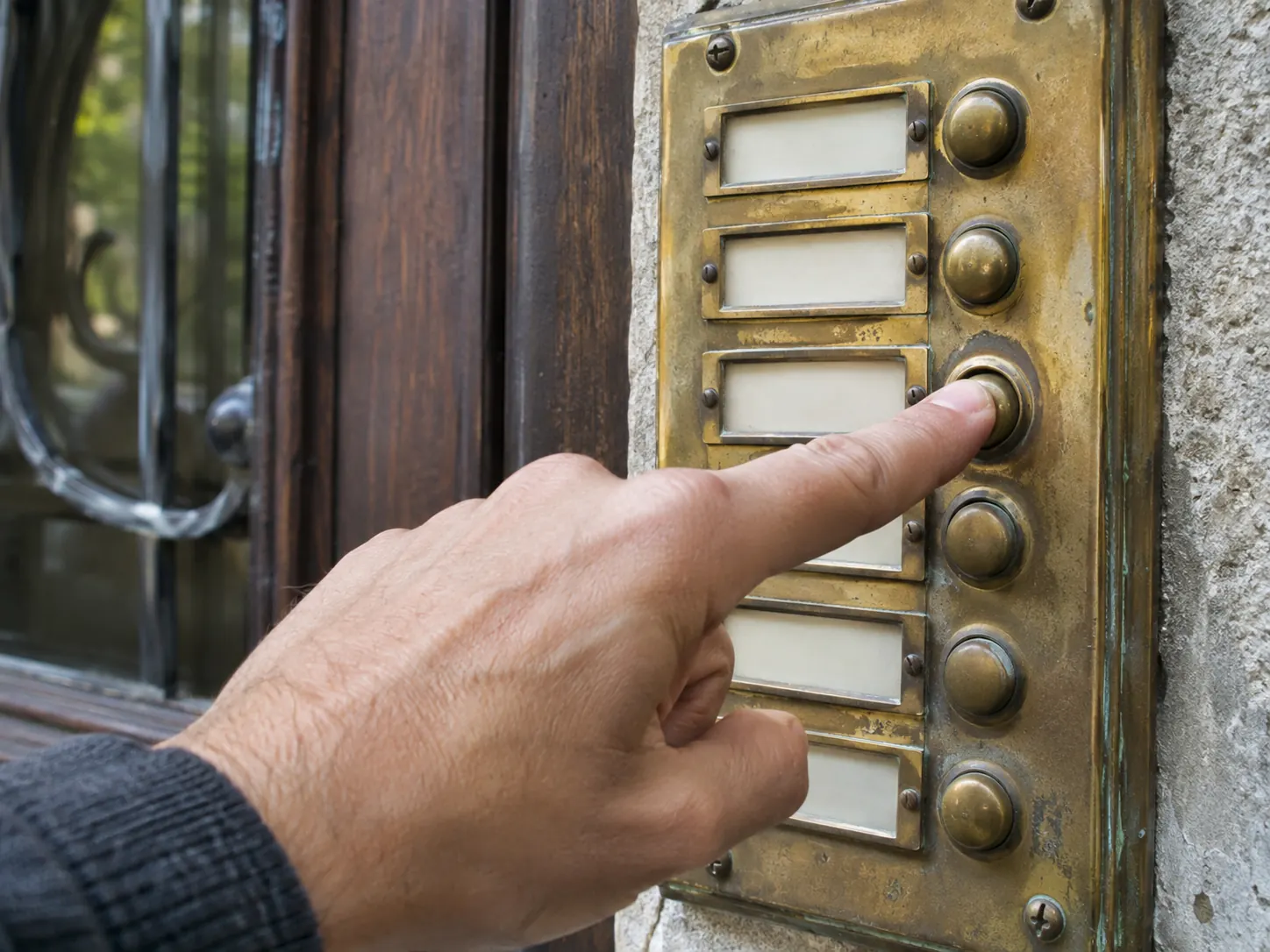
- The entry panel at the front door: a button for each apartment, a speaker and a microphone, and on video systems a camera.
- The amplifier or controller, usually in the basement: it powers the system, makes the call tone, carries the voice and switches the door release.
- The apartment station on each apartment wall: a speaker, a microphone, and Talk, Listen and Door buttons, or a video monitor.
- The door release: an electric strike in the frame, or a magnetic lock, that lets the door open when powered.
What happens when a visitor calls
- The visitor presses your button. That sends a signal up a wire that runs only to your apartment.
- The amplifier sends a tone to your station, and it rings.
- You press Talk to speak and Listen to hear. The voice travels on wires shared by every apartment.
- You press Door. The amplifier powers the strike for a few seconds, and the visitor pushes the door open.
- The door closes and locks itself again.
- Entry panelVisitor presses your button
- AmplifierUsually in the basement. Sends the ring tone.
- Your stationYou talk, listen, then press Door
- Door strikeUnlocks for a few seconds
Shared wires and private wires
That split explains most faults. A problem on your private call wire affects only you. A problem on a shared wire affects every apartment on it. See the wiring guide.
How newer systems differ
- Two-wire systems send power, voice, video and calls over just two wires, using digital addressing to reach each apartment.
- Network systems use the building's internet, and can call phones as well as wall monitors.
- Telephone entry dials the resident's own phone instead of a wall station.
The door release works the same way in all of them.
Common questions
Why does my buzzer ring but the door doesn't open?
The intercom is working. The door strike or its power has failed. See door release repair.
Where is the amplifier?
Usually in the basement near the electric meters, or in a closet near the entrance.