
What gets reported
Tenants can hear and talk to their visitor, but pressing the door button doesn't let them in. Sometimes the door buzzes and still won't push open. Sometimes it opens only if the visitor leans on it at the right moment. The opposite fault matters too: a door that no longer locks after it has been buzzed is a security problem for the whole building.
The usual causes
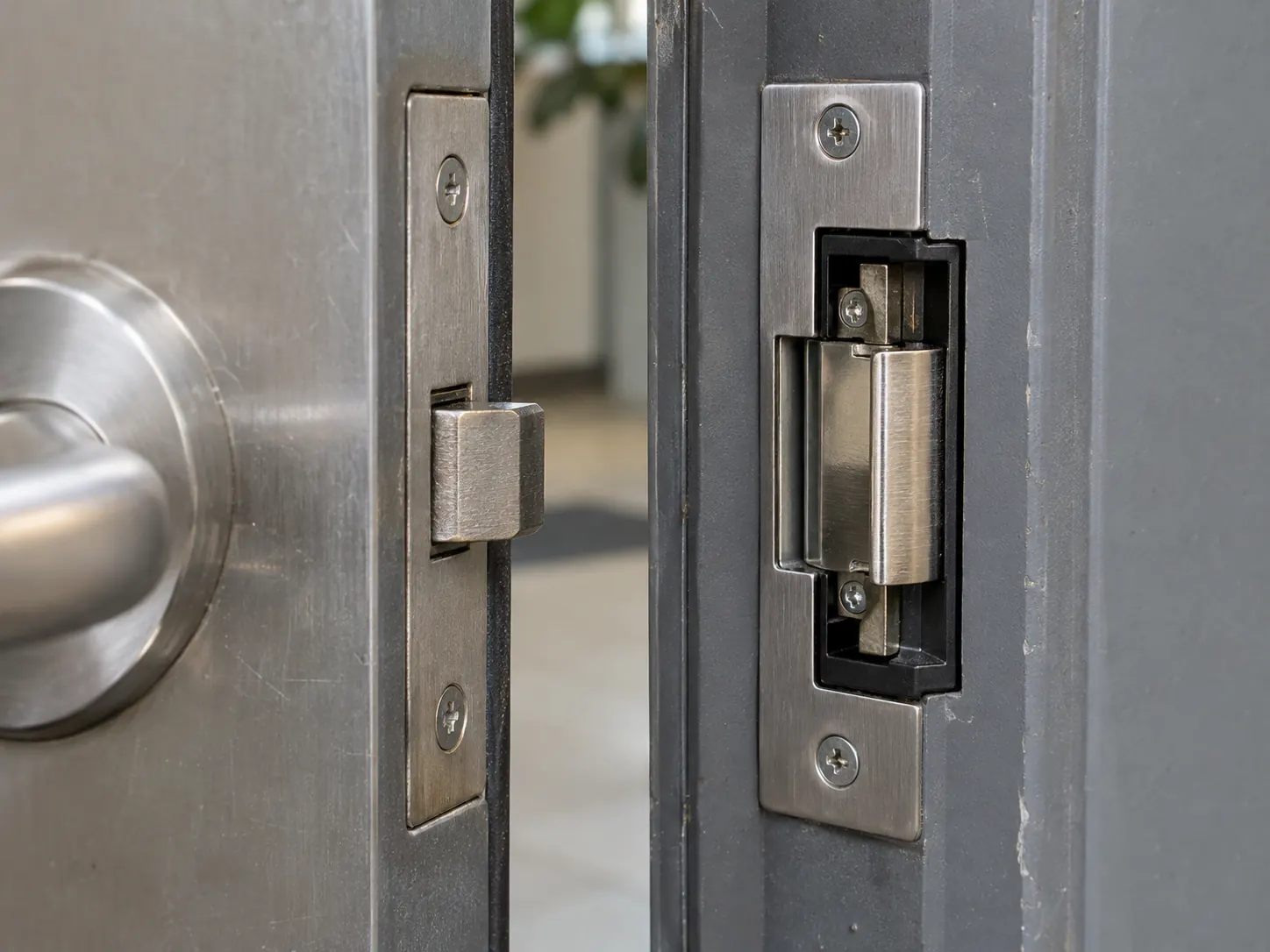
- The electric strike is worn or misaligned. The strike is the powered latch plate in the door frame. Doors sag and frames shift, and a strike that is a few millimetres out will buzz without releasing.
- The strike has burned out. Strikes held open too long, or fed the wrong voltage, fail completely. There is no buzz at the door at all.
- The transformer or release relay has failed. The strike has its own power feed. If that fails, every apartment loses door release at once.
- The door button in one apartment has failed. If other apartments can open the door and one can't, the fault is in that unit's station.
- The door closer or the latch is the real problem. A door that doesn't close fully never latches, and a stiff latch won't retract. Neither is an intercom fault, but both get reported as one.
What the super can check first
- Have someone stand at the door while a tenant presses the button. Listen for a buzz or click at the frame.
- If it buzzes, have them push the door firmly while it's buzzing. If that works, the strike is misaligned.
- Try the door button from a second apartment. If that works, the fault is in the first unit's station.
- Watch the door close on its own. If it stops short of latching, the closer needs adjusting.
Building staff shouldn't open the lobby panel or the amplifier cabinet. The wiring is low voltage, but the power supply that feeds it is not, and a crossed wire can take out every apartment on the line.
How we fix it
We check for power at the strike while the button is pressed, which separates an electrical fault from a mechanical one in a few minutes.
A misaligned strike is adjusted or refitted. A burned-out strike is replaced with one matched to the door, the frame and the system voltage. A failed transformer or relay is replaced at the amplifier. If the door closer or lock is the cause, we say so, and we can fit door hardware where it is part of the entry system.
What it costs
Most door release repairs cost $200 to $400. A new electric strike costs more, depending on the door and frame, so contact us for a price.
Repair or replace?
Door release faults are almost always repairs. The strike and its power supply are separate from the intercom, so a failed strike is never a reason to replace the system.
Common questions
The door buzzes but doesn't open. Is the intercom broken?
Usually not. A buzz means power is reaching the strike. The strike is misaligned or worn, or the latch is binding.
Our front door doesn't lock after someone is buzzed in. Is that urgent?
Yes. A strike that sticks open leaves the building unlocked. Call 718-252-2730.
Can you fit a new strike to an old door?
In most cases, yes. Old wood and steel frames both take modern strikes, though some need the frame cut or a surface-mounted strike.
Do you repair magnetic locks?
Yes. We service magnetic locks and the exit buttons and sensors that go with them. See electric strikes and magnetic locks.