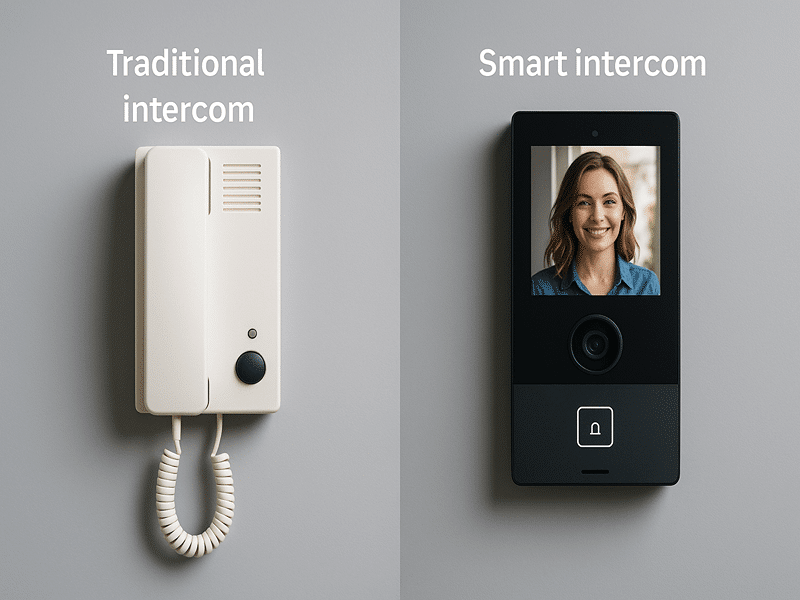
Traditional vs. Smart Intercom Systems :What to consider for Your NYC Property
Traditional vs smart intercom systems can provide different options for communication , video and connected features in NYC properties.
For property owners and managers in NYC, the right choice depends on the building’s existing wiring and equipment, network infrastructure, desired features, installation requirements, and budget. Understanding the differences can help you determine which type of intercom system may be appropriate for your property.
What is a Traditional Intercom System?
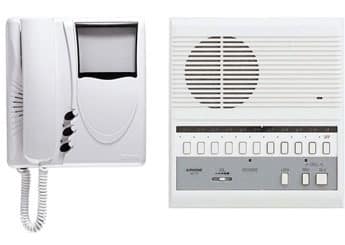
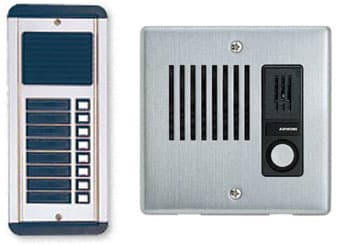
A traditional intercom system generally uses dedicated wiring to provide audio communication between an entrance station and one or more indoor stations. These systems have been used in homes, apartment buildings, offices, and other properties for decades.
Traditional intercoms can be a practical choice for properties that need straightforward communication without the network-based features available on newer systems.
Key Features of Traditional Intercom Systems
Simplicity: Traditional intercoms can provide straightforward communication between designated locations without requiring smartphone or network-based features.
Reliability: A properly installed and maintained traditional intercom can provide dependable communication. Like any system, however, components, wiring, power supplies, door-release equipment, or entrance panels can develop problems over time.
Cost Considerations: Traditional systems may have lower equipment costs than some newer systems, although the total installation cost depends on the property, wiring, equipment, and installation requirements.
Traditional intercom systems may be suitable for smaller properties, buildings that already have compatible wiring, or owners who prefer a straightforward communication system.
What is a Smart Intercom System?
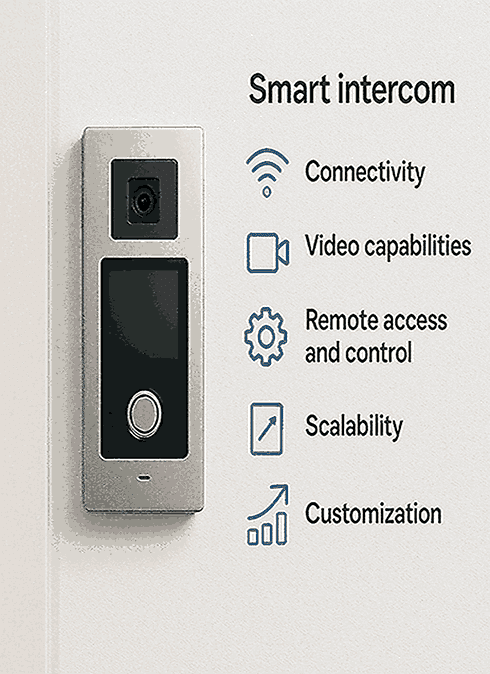
A smart intercom system uses newer technology and network connectivity to provide communication and additional features that may not be available with traditional systems.
Depending on the equipment, smart intercoms may use IP networks or Wi-Fi and can support audio, video, mobile communication, remote features, notifications, and other connected functions.
The features available vary by manufacturer and system, so it is important to determine what the equipment actually supports before choosing a system.
Connectivity: Some smart intercom systems connect through a building’s network or Wi-Fi, allowing compatible devices and system components to communicate.
Video Capabilities: Many newer intercom systems can include cameras and indoor video monitors, allowing users to see and communicate with visitors.
Remote Communication: Depending on the system, authorized users may be able to answer intercom calls or use supported features through a smartphone or other connected device.
Additional Features: Some systems offer mobile notifications, app-based settings, remote management, or other connected features. Available options depend on the equipment and system configuration.
Scalability: Some smart intercom systems can accommodate additional devices or features as a property changes. Expansion depends on the system architecture, equipment, and available infrastructure.
Smart intercom systems may be appropriate for modern homes, apartment buildings, commercial properties, and other locations where video or network-connected features are useful.
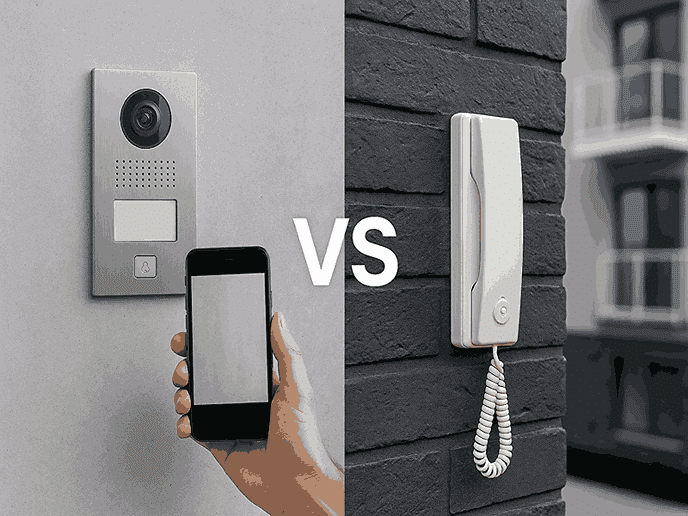
Traditional vs. Smart Intercom Systems
Functionality:
Traditional systems generally focus on basic communication between an entrance and indoor stations.
Smart systems can offer additional features such as video communication, mobile applications, remote communication, and notifications when supported by the equipment.
Installation:
Traditional systems commonly use dedicated intercom wiring. Existing wiring may sometimes be reused when compatible with the replacement equipment.
Smart systems may use network cabling, Wi-Fi, or other supported connections. Although some installations may use existing network infrastructure, additional cabling, equipment, power, or configuration may still be required.
Cost:
Smart intercom systems can have higher equipment and installation costs than basic traditional systems because they may include additional hardware and technology.
The overall cost of either type depends on the building, number of units, existing infrastructure, equipment selected, and installation requirements.
Security:
Traditional systems may provide audio communication without video.
Smart systems that include video can allow residents or authorized users to see and communicate with visitors before deciding whether to grant entry.
Intercom Installation and Service in NYC
Jacob Intercom has more than 35 years of experience providing intercom installation, repair, replacement, and upgrade services throughout NYC.
We work with traditional, wired, wireless, and IP-based intercom systems for homes, apartment buildings, and businesses. Our team can evaluate existing equipment and help determine what type of system may be appropriate for the property.
If you are considering replacing an older intercom or installing a new system, contact Jacob Intercom to discuss your property’s needs and available options.